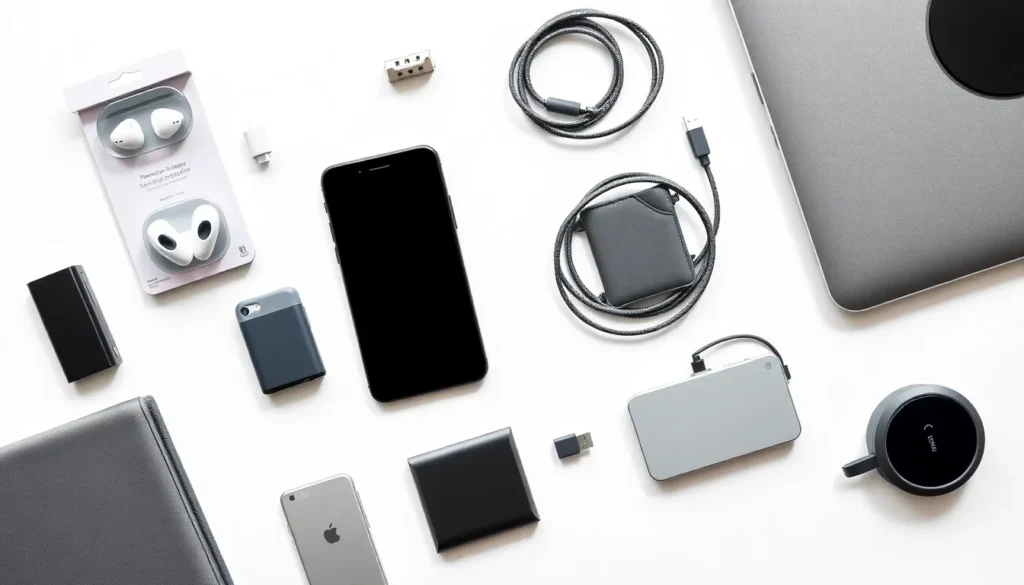


Technology news moves fast. Every week brings new announcements, product launches, and research breakthroughs that change how people live and work. From artificial intelligence reshaping industries to smartphones getting smarter, staying informed matters more than ever.
This article covers the most important technology news trends in 2025. Readers will learn about AI developments, consumer electronics, cybersecurity threats, next-generation connectivity, and sustainable tech solutions. Whether someone follows tech casually or professionally, these updates provide a clear picture of where the industry is heading.
Table of Contents
ToggleKey Takeaways
- AI dominates 2025 technology news, with generative tools now creating videos, music, and code while transforming healthcare through earlier cancer detection and faster drug discovery.
- Consumer electronics evolve rapidly as foldable phones gain market share and smartwatches achieve clinical-grade health monitoring accuracy.
- Cybersecurity threats intensify with a 30% rise in ransomware attacks, pushing organizations to adopt passkeys and zero trust architecture.
- 5G deployment matures with real industrial applications, while 6G research promises terabit speeds by 2030.
- Sustainability becomes a tech industry priority as companies invest in renewable energy for data centers and expand device recycling programs.
- Staying current with technology news helps professionals and consumers navigate AI regulations, data privacy laws, and emerging connectivity standards.
Artificial Intelligence and Machine Learning Breakthroughs
Artificial intelligence dominates technology news headlines in 2025. Major companies continue releasing more capable AI systems, and the applications keep expanding.
Generative AI tools have moved beyond text and images. They now create videos, music, and even functional code with minimal human input. OpenAI, Google, and Anthropic push new model releases quarterly. Each update brings better reasoning, longer context windows, and fewer errors.
Machine learning also transforms healthcare. AI systems now detect certain cancers earlier than human radiologists. Drug discovery timelines have shortened from years to months. Hospitals use predictive algorithms to allocate resources and identify at-risk patients.
But AI growth raises questions. Job displacement worries workers across many sectors. Governments struggle to write regulations fast enough. The European Union’s AI Act took effect in 2024, and other regions are following with their own rules.
Enterprise adoption accelerates too. Companies deploy AI for customer service, supply chain optimization, and financial forecasting. Microsoft, Salesforce, and other enterprise software providers embed AI features into their platforms. The productivity gains are measurable, though implementation challenges remain.
Smaller AI models gain popularity as well. Not every task needs a massive language model. Efficient, specialized models run on smartphones and edge devices. This shift makes AI accessible without constant cloud connectivity.
Advances in Consumer Electronics and Gadgets
Consumer electronics keep evolving, and 2025 brings notable upgrades across device categories.
Smartphones remain the flagship product. Apple, Samsung, and Google released new models with improved cameras, longer battery life, and on-device AI features. Foldable phones gained market share, though durability concerns persist. The average smartphone now handles tasks that required laptops just five years ago.
Wearables expand beyond fitness tracking. Smartwatches monitor blood pressure, glucose levels, and sleep quality with clinical-grade accuracy. The Apple Watch and Samsung Galaxy Watch compete directly with medical devices. Health insurers even offer discounts for users who share their data.
Augmented reality glasses make progress. Meta, Apple, and other manufacturers ship products aimed at mainstream consumers. These devices overlay digital information on the physical world. Early use cases include navigation, translation, and hands-free communication. Mass adoption hasn’t arrived yet, but the technology improves each generation.
Smart home devices get smarter. Matter, the universal smart home standard, simplifies setup and compatibility. Devices from different manufacturers finally work together without frustration. Voice assistants understand context better and handle multi-step requests.
Gaming hardware pushes boundaries too. The latest consoles and graphics cards deliver stunning visuals. Cloud gaming services reduce hardware requirements for casual players. Virtual reality headsets become lighter and more comfortable, though content libraries still lag behind the hardware.
Cybersecurity Developments and Data Privacy Concerns
Cybersecurity remains a critical topic in technology news. Threats grow more sophisticated, and organizations scramble to keep up.
Ransomware attacks increased 30% in 2024 according to industry reports. Healthcare systems, schools, and municipal governments face particular risk. Attackers target organizations with limited IT budgets and critical operations. The average ransom payment now exceeds $500,000.
AI creates new security challenges. Attackers use machine learning to craft convincing phishing emails and deepfake audio. Traditional detection methods struggle against AI-generated content. Security teams fight fire with fire, deploying AI tools to identify threats faster.
Data privacy laws continue spreading globally. California, Virginia, and other US states enforce their own regulations. International companies must track dozens of different compliance frameworks. The cost of violations keeps rising, major fines regularly hit hundreds of millions of dollars.
Password alternatives gain traction. Passkeys replace traditional passwords on many platforms. Apple, Google, and Microsoft support the standard. Users authenticate with biometrics or device-based credentials instead of memorized strings. This shift reduces phishing risk significantly.
Zero trust architecture becomes standard practice. Organizations verify every user and device before granting access. The old model of trusting anything inside the network no longer works. Remote work accelerated this transition, and it shows no signs of reversing.
The Future of Connectivity: 5G, 6G, and Beyond
Connectivity infrastructure shapes what technology can accomplish. Faster, more reliable networks enable new applications and services.
5G deployment continues worldwide. Coverage gaps still exist in rural areas, but urban networks perform well. The promised benefits, low latency, high bandwidth, massive device capacity, are finally reaching consumers. Video calls don’t drop. Game streaming works smoothly. Downloads finish in seconds.
Industrial 5G applications show real results. Factories use private 5G networks for automation and remote monitoring. Ports and warehouses track assets in real time. Healthcare facilities enable remote surgery with guaranteed low latency. These enterprise use cases justify the infrastructure investment.
6G research accelerates even as 5G rolls out. Expected deployment around 2030, 6G promises terabit speeds and even lower latency. Researchers explore terahertz frequencies and new antenna designs. The technology will support applications that seem futuristic today, holographic communication, instant digital twins, and seamless mixed reality.
Satellite internet expands access. SpaceX’s Starlink serves millions of subscribers globally. Amazon’s Project Kuiper launches satellites steadily. These systems bring broadband to areas that wired infrastructure can’t reach economically. Rural connectivity improves, though urban performance can’t match fiber.
Wi-Fi 7 enters the market. The new standard delivers faster speeds and better performance in crowded environments. Routers and devices supporting Wi-Fi 7 ship throughout 2025. Home networks finally keep pace with increasing bandwidth demands.
Sustainability in Tech: Green Innovations and Eco-Friendly Solutions
Environmental concerns influence technology news coverage and corporate strategy. The tech industry consumes enormous energy and resources. Companies face pressure from regulators, investors, and consumers to reduce their impact.
Data centers draw particular attention. AI workloads demand massive computing power. Major providers, Amazon, Microsoft, Google, invest heavily in renewable energy. Some build data centers near hydroelectric dams or wind farms. Nuclear power partnerships gain momentum as a carbon-free option.
Device manufacturers address e-waste. Apple, Samsung, and others expand recycling programs. Some companies design phones and laptops for easier repair. The EU’s right-to-repair legislation requires manufacturers to provide spare parts and repair documentation. This shift extends device lifespans and reduces waste.
Chip manufacturing becomes more efficient. New fabrication processes use less water and energy. Companies relocate production to regions with cleaner power grids. The semiconductor industry, historically resource-intensive, makes measurable progress.
Consumers show interest in sustainable options. Surveys indicate willingness to pay premiums for eco-friendly products. Refurbished device markets grow rapidly. Trade-in programs encourage upgrades while keeping old devices out of landfills.
Carbon footprint tracking becomes standard. Companies report emissions from their operations and supply chains. Software tools help businesses measure and reduce their environmental impact. Transparency improves, though greenwashing remains a concern.